

products
products

Pressure Transducers and Transmitters

Highly accurate pressure transmitters and transducers
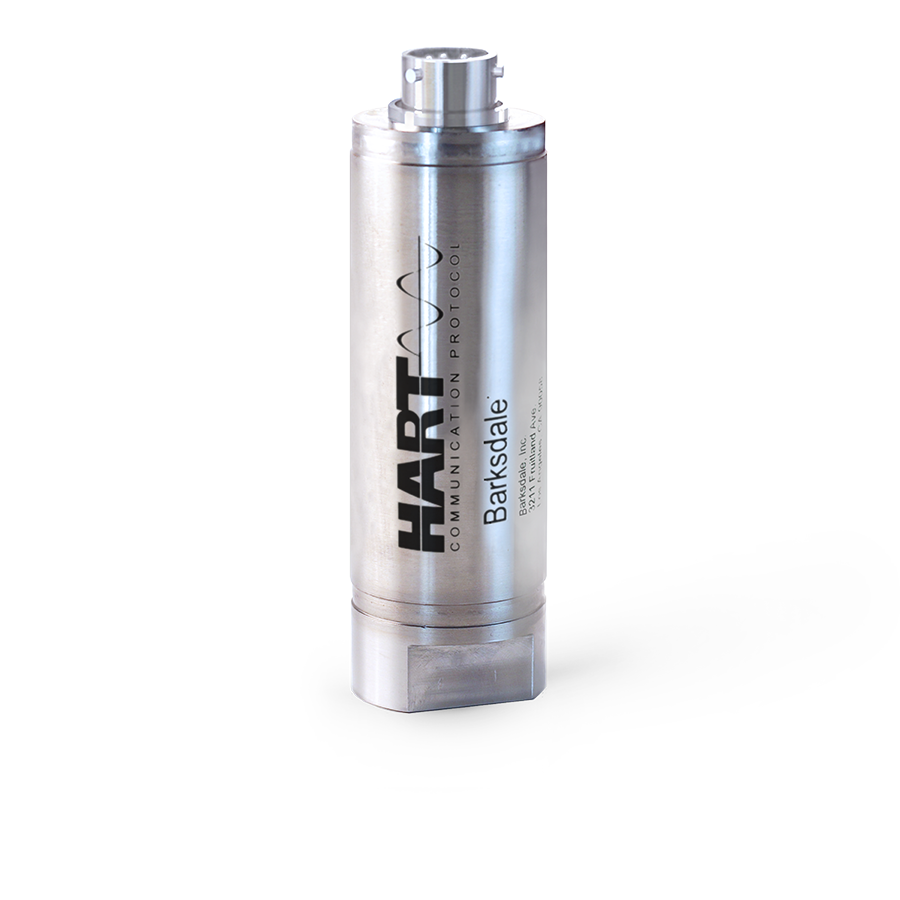
High accuracy pressure transmitters and transducers with HART® communication protocol with 24 standard ranges from vacuum to 30,000 psi Barksdale Intelligent Transmitters (BiT), Series 450 is a high-pressure…
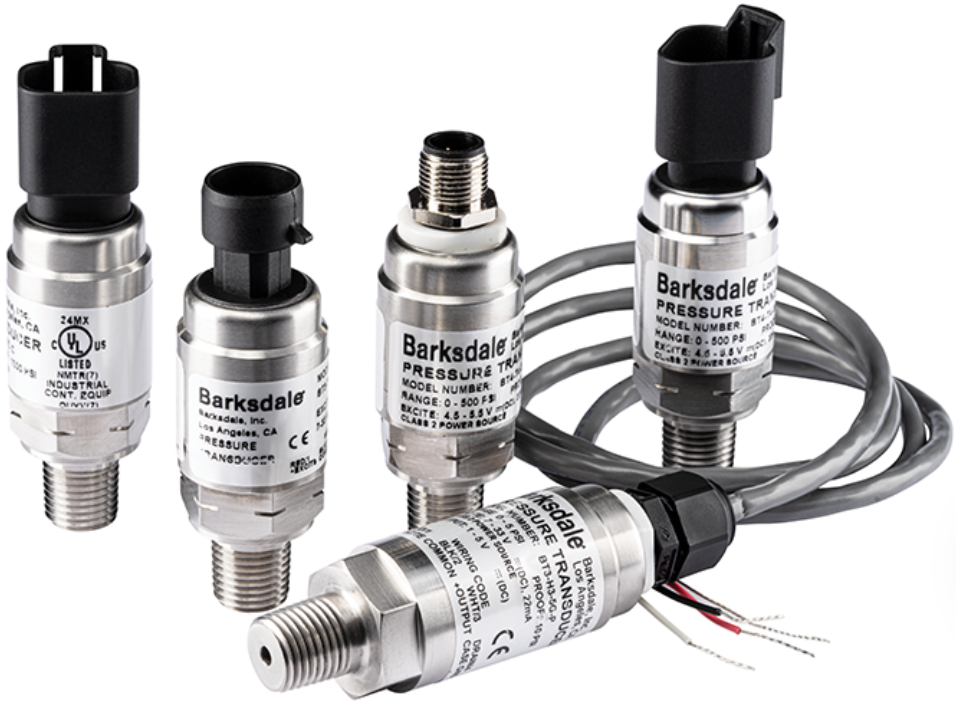
Get the digital pressure transducers and transmitters that match your exact monitoring and control requirements for gas delivery or mobile hydraulic equipment and vehicle applications right when you need them.…
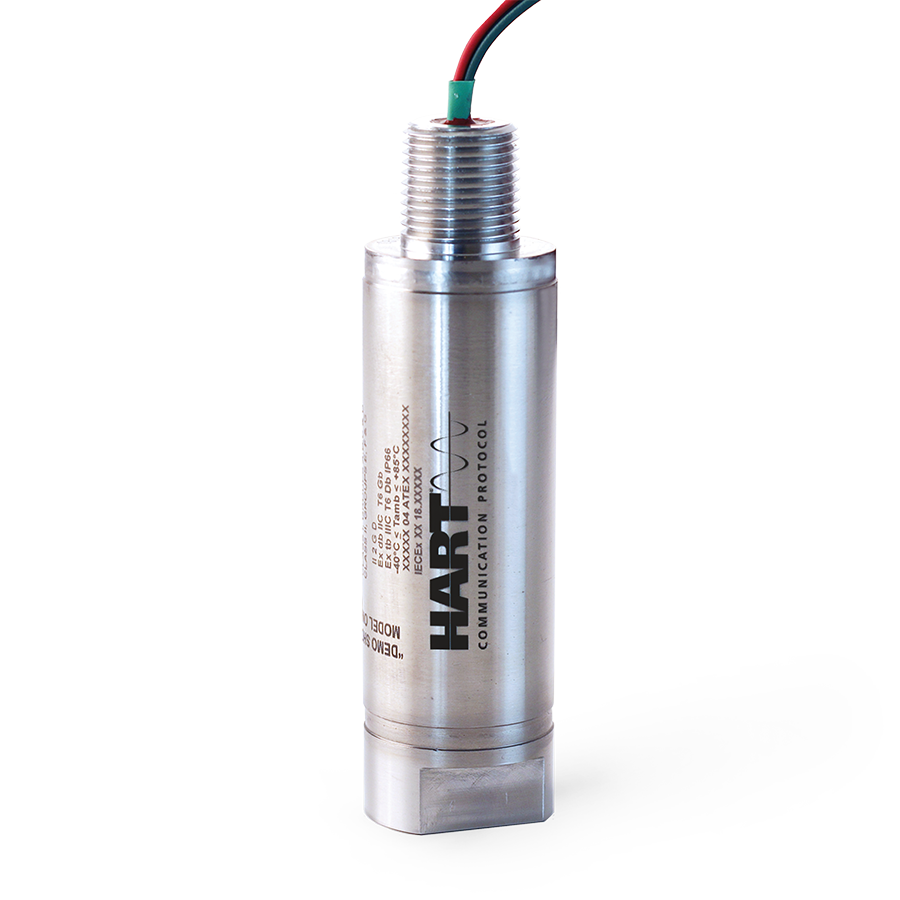
Barksdale Intelligent Transmitter (BiT), Series 450X is a high pressure, explosion-proof compact transducer with HART® communication protocol option. HART® enabled pressure sensors can communicate over the…
Barksdale Intelligent Transmitters (BiT), Series 450E and H450E are BiT's Intrinsically Safe Pressure Transducers and Transmitters. Barksdale has been manufacturing explosion proof pressure sensors for many…

Frequently Asked Questions

Find answers to common questions below

A1: A pressure transducer converts pressure into a low‑level electrical signal (mV/V or V). A pressure transmitter adds signal conditioning to output standardized control signals—typically 4–20 mA or 0–10 V—and often includes diagnostics (e.g., HART). Barksdale offers both types across families like BoT (transducers/transmitters) and intelligent BiT 450 series with HART.
A2: Barksdale devices feature 316/17‑4PH stainless‑steel wetted parts, IP66/IP67 & NEMA 4X housings on many models, EMC immunity per IEC 61000 (BoT BTX), and long‑term stability up to ±0.2–0.25% FSO/yr. Explosion‑proof (Ex db) and intrinsically safe (Ex ia) variants are available. These specifications position Barksdale competitively for shock/vibration, temperature, and EMI/EMC environments.
A3: Depending on region and zone: ATEX/IECEx for explosive atmospheres (Ex db explosion‑proof; Ex ia intrinsically safe; Ex nA/non‑incendive), UL/cULus for North America (Class I Div 1/2), and ingress/IP ratings (e.g., IP66/67). Barksdale models like 450X and 450E carry these marks per datasheet/manual.
A4: Common issues: (1) Fluid hammer overpressure → use snubbers and proper plumbing; (2) EMI/ground loops → follow EMC wiring/grounding and shield practice; (3) Thermal effects → select compensated ranges and mount away from heat; (4) Mechanical vibration → remote mounting or dampening; (5) Media compatibility/corrosion → verify wetted materials (316L/17‑4PH) and seals.
A5: Signal conditioning (amplification, filtering, temperature compensation, linearization) boosts SNR, stabilizes output across temperature, and delivers calibrated ranges (e.g., 4–20 mA) less susceptible to noise over distance. Barksdale’s BiT/BoT electronics specify IEC 61000 EMC immunity and tight accuracy classes (±0.1–0.25% FSO).
A6: Oil & gas (upstream/downstream), petrochemical, chemical injection, refineries, power generation, and hazardous mobile equipment—applications documented for BiT 450X/450E families.
A7: Standardized outputs (4–20 mA, 0–10 V, ratiometric 0.5–4.5 V) wire directly to PLC analog inputs; HART enables remote configuration and diagnostics over the 4–20 mA loop. Manuals include wiring conventions (e.g., Red = +Excite, Black = –Excite; case ground).
A8: HART provides digital configuration, trimming, and diagnostics over the analog loop (no extra wires), supports turndown (e.g., 10:1 on BiT 450), and reduces maintenance time via field calibration.
A9: Define normal and peak pressures; choose a range so operating pressure sits in ~30–80% span; confirm proof/overpressure ratings (e.g., 2× typical; BoT up to 23×); select appropriate output (4–20 mA for noise immunity), port thread, wetted materials, and required approvals.
A10: Digital platforms with higher EMC immunity and diagnostics (HART/IO‑Link), modular OEM designs with rapid configuration, hydrogen‑ready materials, and improved long‑term stability for IIoT predictive maintenance. Barksdale publishes hydrogen transducer options and modular BoT platforms.
A11: For rugged mobile hydraulics, BoT BTX (heavy‑duty 316/17‑4 SS, shock/vibration ratings, fast 1–5 ms response, multiple outputs)—final choice depends on range, port, and approvals.
A12: Use Barksdale’s ‘Find a Distributor’ and Product Configurator on the website to obtain quotes and local availability; authorized distributors provide pricing and lead times.
A13: BiT 450 with HART supports field calibration and trimming. Other families follow the procedure in the installation manual: apply reference pressure at defined temperature, adjust zero/span (or via DCS), and verify linearity. Always consult the specific series IOM.
A14: Standard devices output analog/HART. For digital fieldbuses like Modbus/CAN, integrate via PLC/A‑D modules or select Barksdale electronic switches with IO‑Link (for discrete/analog over digital). Check product options for your platform.
A15: Datasheets cite long‑term stability (e.g., ±0.2–0.25% FSO/year) and life cycles up to 10 million pressure cycles (BoT). Actual service life depends on media, pressure spikes, and environment; proper snubbing and EMC practices extend life.
A16: 1) Verify loop power and polarity; 2) Inspect wiring/shield/ground; 3) Confirm scaling in PLC; 4) Bleed trapped air, install snubber to prevent hammer; 5) Compare with reference gauge;
A17: Periodic visual inspection of conduit/seals per EN/IEC 60079 and NEC/CEC; verify grounds, check for moisture ingress (IP66/67), inspect for media leaks, and confirm calibration intervals as specified.
A18: Generically, engineers compare Barksdale with brands like WIKA and Ashcroft in buyer guides and lists; inclusion depends on application and certification needs. Always evaluate against range, accuracy, approvals, and support.
A19: Modular BoT platform with 55+ standard options, customizable ranges/ports/electricals, short lead times, and documented stability/EMC. OEM series BoT provides compact footprints and multiple outputs for integration.
A20: Barksdale publishes competitive specs: stainless wetted materials, IP66/67, 2× proof or higher, ±0.1–0.25% accuracy on BiT 450, and EMC conformity. Direct comparisons should be made model‑to‑model using each vendor’s datasheets for the target range/environment.
A21: In practice, engineers frequently reference Barksdale alongside large industrial brands; however, selection is application‑specific. For data‑driven shortlists, consult industry buyer’s guides and certified vendor lists.
A22: Explosion‑proof (Ex db) and intrinsically safe (Ex ia) models like BiT 450X/450E and 425X are commonly specified due to hazardous approvals, stainless wetted parts, and IP66/67 housings.
A23: Consider 17‑4PH sensor elements with ≥2× proof pressure; BoT BTX covers ranges to 600 bar with 2× proof and fast response. Validate port, temperature, and approvals.
A24: Compare on: shock/vibration ratings, IP/NEMA ingress, proof/overpressure, accuracy, EMC, and availability of hazardous approvals. Barksdale BoT/BiT provide stainless construction, IEC 61000 EMC, and hazardous variants. Use both vendors’ datasheets for exact equivalence.
A25: Barksdale’s BiT 450 intelligent transmitter family offers optional HART across ordinary and hazardous variants (450, 450E, 450X).
A26: BiT 450E offers typical accuracy options down to ±0.1% FSO (option A1) and ±0.25% standard; response time is application‑dependent—consult the 450E datasheet for exact dynamics.
A27: Yes—models such as BiT 450E/450X carry North American approvals (e.g., Class I Div 1/Zone 1) per their certificates. Always match the exact approval string on the nameplate to your requirements.
A28: Typical operating: −40 to +85 °C (model dependent). confirm each model’s T‑class and ambient limits in its datasheet.
A29: 1) Loop‑power with a precision supply; 2) Plumb to a traceable pressure standard; 3) Set zero at no‑pressure (4 mA), set span at full‑scale (20 mA); 4) Iterate and document as‑left data. HART units allow digital trim.
A30: Piezoresistive elements (common in stainless oil‑filled designs) offer high ranges and good linearity; capacitive/ceramic elements provide robustness for certain media and lower ranges. BoT catalog lists ceramic (-C), piezoresistive (-P), and welded stainless (-W) element classes.
A31: Order through Barksdale’s distributor network and product configurator; select ATEX/IECEx options on BiT 450E/450X families. Certificates are downloadable from product pages.
A32: Lead time depends on configuration and approvals. Use the online configurator or contact authorized distributors for current availability and quoted ship dates.
A33: Yes—Barksdale maintains a global network of authorized distributors; use the ‘Find a Distributor’ tool to locate partners by region.
A34: Generally, intelligent/HART or digitally conditioned devices cost more than basic amplified analog models; total cost of ownership may be lower due to diagnostics and easier calibration. Request quotes for specific configurations.
A35: Barksdale lists RoHS/REACH compliance on families like BiT 450 and BoT BTX; certificates and declarations are posted with product documentation.
A36: Yes—The modular BoT platform support volume pricing and bespoke configurations via Barksdale Sales.
A37: Warranty terms vary by product/region; consult the individual datasheet or contact Barksdale Support for the current warranty statement tied to your model and application.
A38: Possible causes: no loop power, reversed polarity, open circuit, incorrect scaling in PLC, blocked port/trapped air, or sensor damage from fluid hammer. Verify wiring per manual and install a snubber if hammer is present.
A39: Use a 24 VDC loop supply, connect transmitter in series with PLC analog input: +24 V → Transmitter (+), Transmitter (−) → PLC AI (+), PLC AI (−) → Supply (−). Follow model wiring colors (e.g., Red +, Black –) and ground the case drain as instructed.
A40: Aging of sensing elements, temperature cycling, mechanical stress, and media ingress. Mitigation: choose stable elements (e.g., welded stainless), ensure proper mounting, apply temperature compensation, and recalibrate per interval.
A41: Remove overpressure source, inspect for damage or leaks, power‑cycle the loop, and verify zero/span. If output remains offset, follow the calibration procedure or replace if proof pressure was exceeded.
A42: Look for stainless construction, ±0.25% FSO or better accuracy, IP66/67, EMC to IEC 61000, proof ≥2×, and fast response (≤5 ms). Barksdale BoT BTX families meet these characteristics in many configurations.
A43: Explosion‑proof/intrinsically safe transmitters with stainless wetted parts and hazardous approvals—e.g., BiT 450X/450E—are typical choices for O&G skids, pipelines, and refineries
A44: ‘Better’ depends on your requirements. Compare accuracy, turn‑down, proof/overpressure, ingress, approvals, footprint, lead time, and cost. Barksdale’s BoT platform emphasizes configurable options and short OEM lead times. Validate with side‑by‑side datasheets.
A45: Seek stainless wetted parts, IP66/67 or higher, UV‑resistant connectors, wide temperature ratings (−40 to +85 °C), and strong EMC immunity. Barksdale models like BoT BTX publish these parameters.